

En préparation
Cet ouvrage est actuellement en cours d’édition.
Il sera prochainement disponible en accès ouvert.
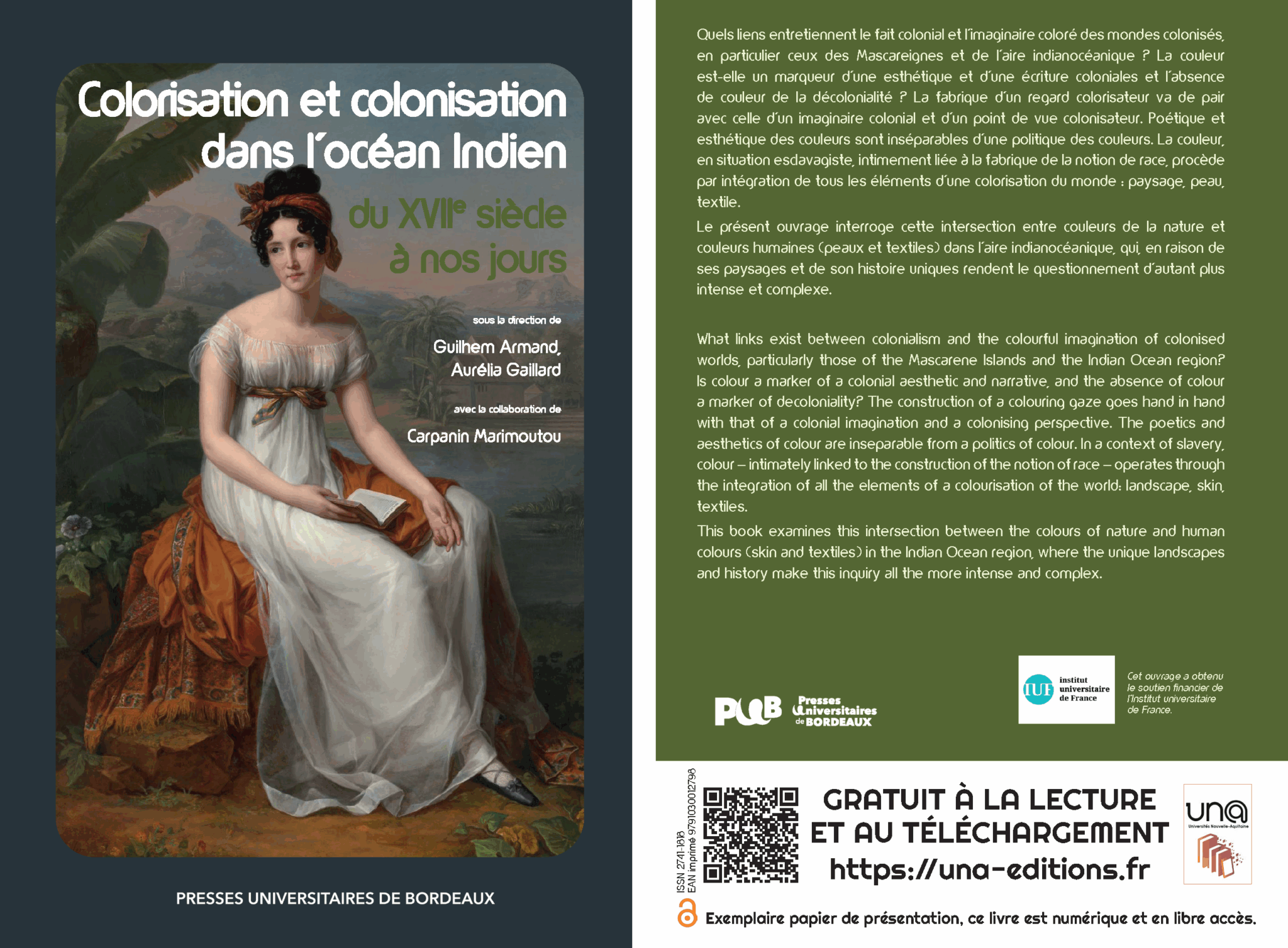
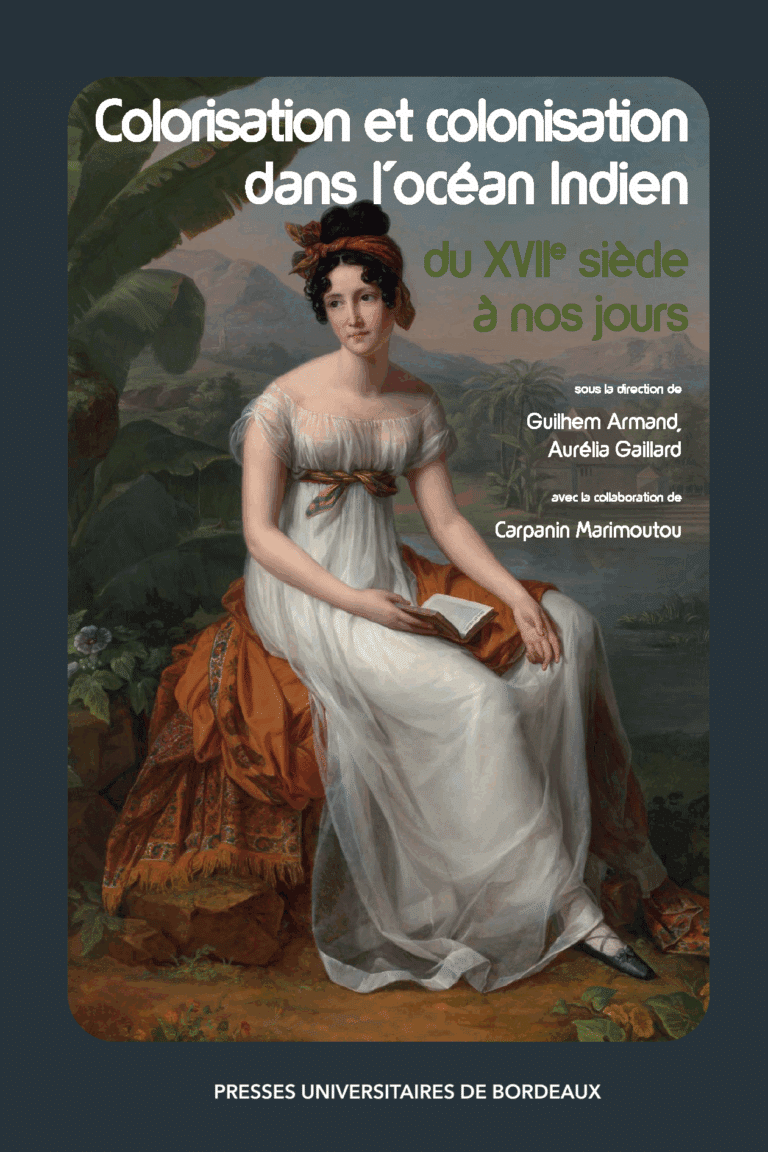
Quels liens entretiennent le fait colonial et l’imaginaire coloré des mondes colonisés, en particulier ceux des Mascareignes et de l’aire indianocéanique ? La couleur est-elle un marqueur d’une esthétique et d’une écriture coloniales et l’absence de couleur de la décolonialité ? La fabrique d’un regard colorisateur va de pair avec celle d’un imaginaire colonial et d’un point de vue colonisateur. Poétique et esthétique des couleurs sont inséparables d’une politique des couleurs. La couleur, en situation esclavagiste, intimement liée à la fabrique de la notion de race, procède par intégration de tous les éléments d’une colorisation du monde : paysage, peau, textile. Le présent ouvrage interroge cette intersection entre couleurs de la nature et couleurs humaines (peaux et textiles) dans l’aire indianocéanique, qui, en raison de ses paysages et de son histoire uniques rendent le questionnement d’autant plus intense et complexe.
couleur; colorisation; couleur de la peau; créole; colonisation; décolonisation; études postcoloniales; exotisme; tropiques; îles; océan Indien; La Réunion; Mascareignes; Madagascar; récits de voyage; paysage; végétation; flore; botanique; agriculture; fonds marins; coquillages; faune; textile; indiennes (textile); sari; bleu; vert; noir et blanc; rouge et vert; François Leguat; Étienne de Flacourt; Bernardin de Saint-Pierre; Timagène Houat; Leconte de Lisle; Évariste Parny; Antoine de Bertin; Eugène Dayot; Marius-Ary Leblond; Jean Albany; Ananda Devi;
What links exist between colonialism and the colourful imagination of colonised worlds, particularly those of the Mascarene Islands and the Indian Ocean region? Is colour a marker of a colonial aesthetic and narrative, and the absence of colour a marker of decoloniality? The construction of a colouring gaze goes hand in hand with that of a colonial imagination and a colonising perspective. The poetics and aesthetics of colour are inseparable from a politics of colour. In a context of slavery, colour – intimately linked to the construction of the notion of race – operates through the integration of all the elements of a colourisation of the world: landscape, skin, textiles. This book examines this intersection between the colours of nature and human colours (skin and textiles) in the Indian Ocean region, where the unique landscapes and history make this inquiry all the more intense and complex.
colour; colourisation; skin colour; Creole; colonisation; decolonisation; postcolonial studies; exoticism; tropics; islands; Indian Ocean; Réunion; Mascarene Islands; Madagascar; travelogues; landscape; vegetation; flora; botany; agriculture; seabed; shells; fauna; textiles; Indian textiles; sari; blue; green; black and white; red and green; François Leguat; Étienne de Flacourt; Bernardin de Saint-Pierre; Timagène Houat; Leconte de Lisle; Évariste Parny; Antoine de Bertin; Eugène Dayot; Marius-Ary Leblond; Jean Albany; Ananda Devi;
Soutien
Cet ouvrage a obtenu le soutien financier de l’Institut universitaire de France.